


EMDR, short for Eye Movement Desensitization and Reprocessing, is a structured, evidence-based therapy that helps your brain reprocess painful memories so they stop hijacking your present. Instead of asking you to relive a difficult event in detail over and over, EMDR uses guided bilateral stimulation, often gentle side-to-side eye movements, to help a stuck memory finally move through and settle. The result many people describe is striking: the event is still part of your story, but it no longer holds the same charge.
If you have ever felt yourself react far bigger than a situation called for, and wondered where that came from, this is the post for you. Here is what EMDR actually does, what a session looks like, and who it helps.
When something overwhelming happens, the brain does not always file the memory away cleanly. It can get stored in a raw, unprocessed form, frozen with the original images, beliefs, emotions, and body sensations attached. Years later, a smell, a tone of voice, or a moment of conflict can trip that wire and you are suddenly flooded with a reaction that belongs to the past, not the present.
That is the engine behind a lot of present-day anxiety, reactivity, and the harsh inner voice that insists you are not enough. You are not overreacting on purpose. An old file never got processed, and it keeps reopening.
The idea behind EMDR is that your brain has a natural ability to heal, the same way your body knows how to close a wound, and that trauma can block that process. EMDR helps restart it. The EMDR International Association explains that the guided bilateral stimulation helps the brain safely reprocess the memory, reducing its emotional intensity and vividness so it can be stored in a healthier way.
This is not a fringe idea. As Cleveland Clinic notes in its overview of how EMDR works and how effective it is, EMDR is recognized as a best-practice trauma treatment by bodies including the World Health Organization and the U.S. Department of Veterans Affairs, with dozens of clinical trials behind it. It also tends to involve less out-of-session homework and, for many people, works faster than talk therapy alone.
People are often relieved to learn how structured and steady the process is. EMDR follows eight phases, and we never rush into the hard material:
Sessions typically run 45 minutes. You stay in control the whole way, and you do not have to narrate every detail of what happened to benefit from it.
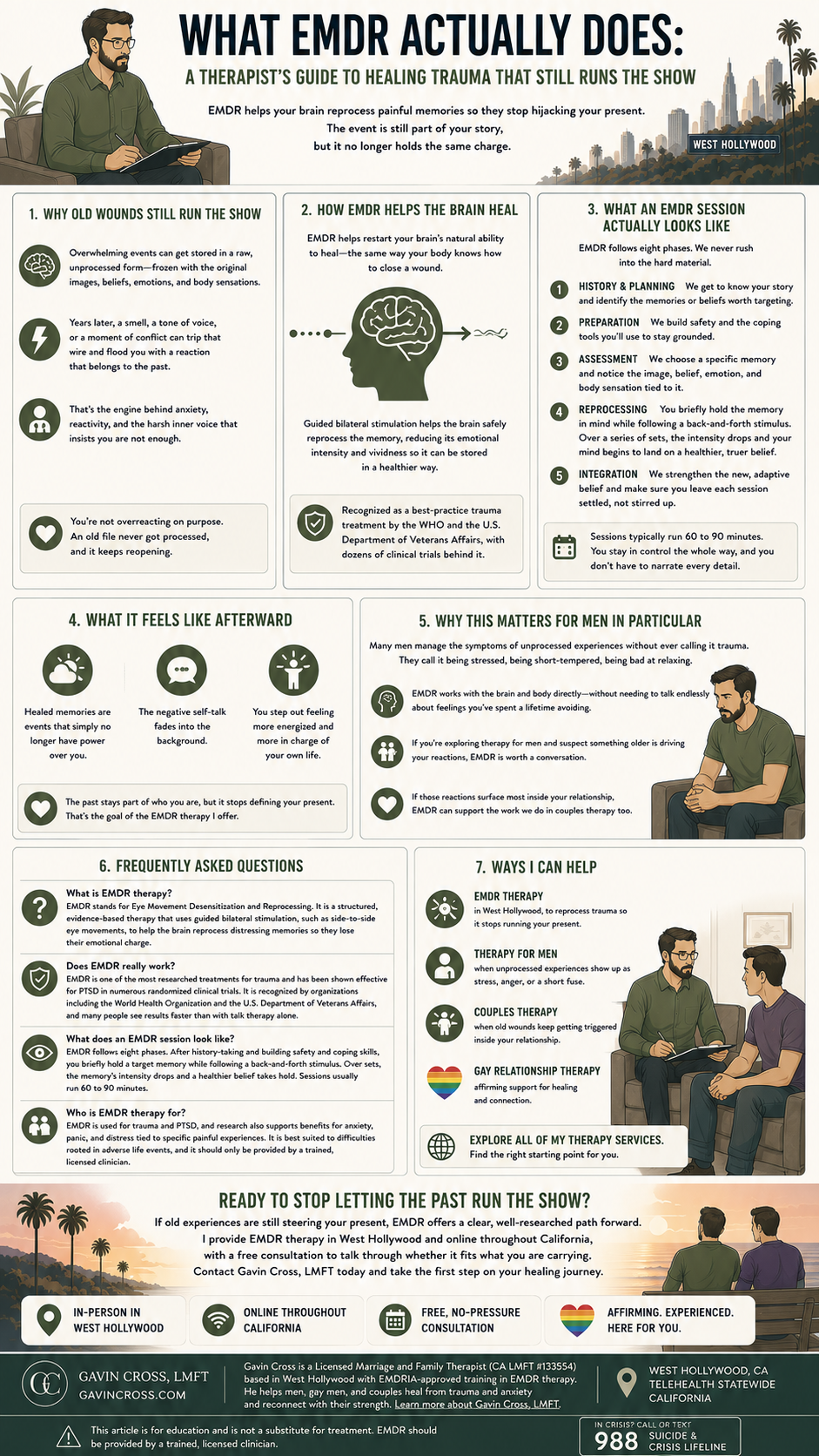
Many of the people I work with describe their healed memories as events that simply no longer have power over them. The past stays part of who you are, but it stops defining your present. The negative self-talk fades into the background, and you step out of sessions feeling more energized and more in charge of your own life. That is the goal of the EMDR therapy I offer.
A lot of men spend years managing the symptoms of unprocessed experiences without ever calling it trauma. They call it being stressed, being short-tempered, being bad at relaxing. EMDR can be especially useful here because it does not require you to talk endlessly about feelings you have spent a lifetime avoiding. It works with the brain and body directly. If you are exploring therapy for men and suspect that something older is driving your present-day reactions, EMDR is worth a conversation. And if those reactions surface most inside your relationship, EMDR can support the work we do in couples therapy too.
EMDR stands for Eye Movement Desensitization and Reprocessing. It is a structured, evidence-based therapy that uses guided bilateral stimulation, such as side-to-side eye movements, to help the brain reprocess distressing memories so they lose their emotional charge.
EMDR is one of the most researched treatments for trauma and has been shown effective for PTSD in numerous randomized clinical trials. It is recognized by organizations including the World Health Organization and the U.S. Department of Veterans Affairs, and many people see results faster than with talk therapy alone.
EMDR follows eight phases. After history-taking and building safety and coping skills, you briefly hold a target memory while following a back-and-forth stimulus. Over sets, the memory's intensity drops and a healthier belief takes hold. Sessions usually run 60 to 90 minutes.
EMDR is used for trauma and PTSD, and research also supports benefits for anxiety, panic, and distress tied to specific painful experiences. It is best suited to difficulties rooted in adverse life events, and it should only be provided by a trained, licensed clinician.
If old experiences are still steering your present, EMDR offers a clear, well-researched path forward. I provide EMDR therapy in West Hollywood and online throughout California, with a free consultation to talk through whether it fits what you are carrying. Contact Gavin Cross, LMFT today and take the first step on your healing journey.
Gavin Cross is a Licensed Marriage and Family Therapist (CA LMFT #133554) based in West Hollywood with EMDRIA-approved training in EMDR therapy. He helps men, gay men, and couples heal from trauma and anxiety and reconnect with their strength. Learn more about Gavin Cross, LMFT.
This article is for education and is not a substitute for treatment. EMDR should be provided by a trained, licensed clinician. If you are in crisis, please call or text the 988 Suicide and Crisis Lifeline.
There’s a big, beautiful world out there. You deserve to experience all it has to offer.
Let’s rediscover your strength.
