

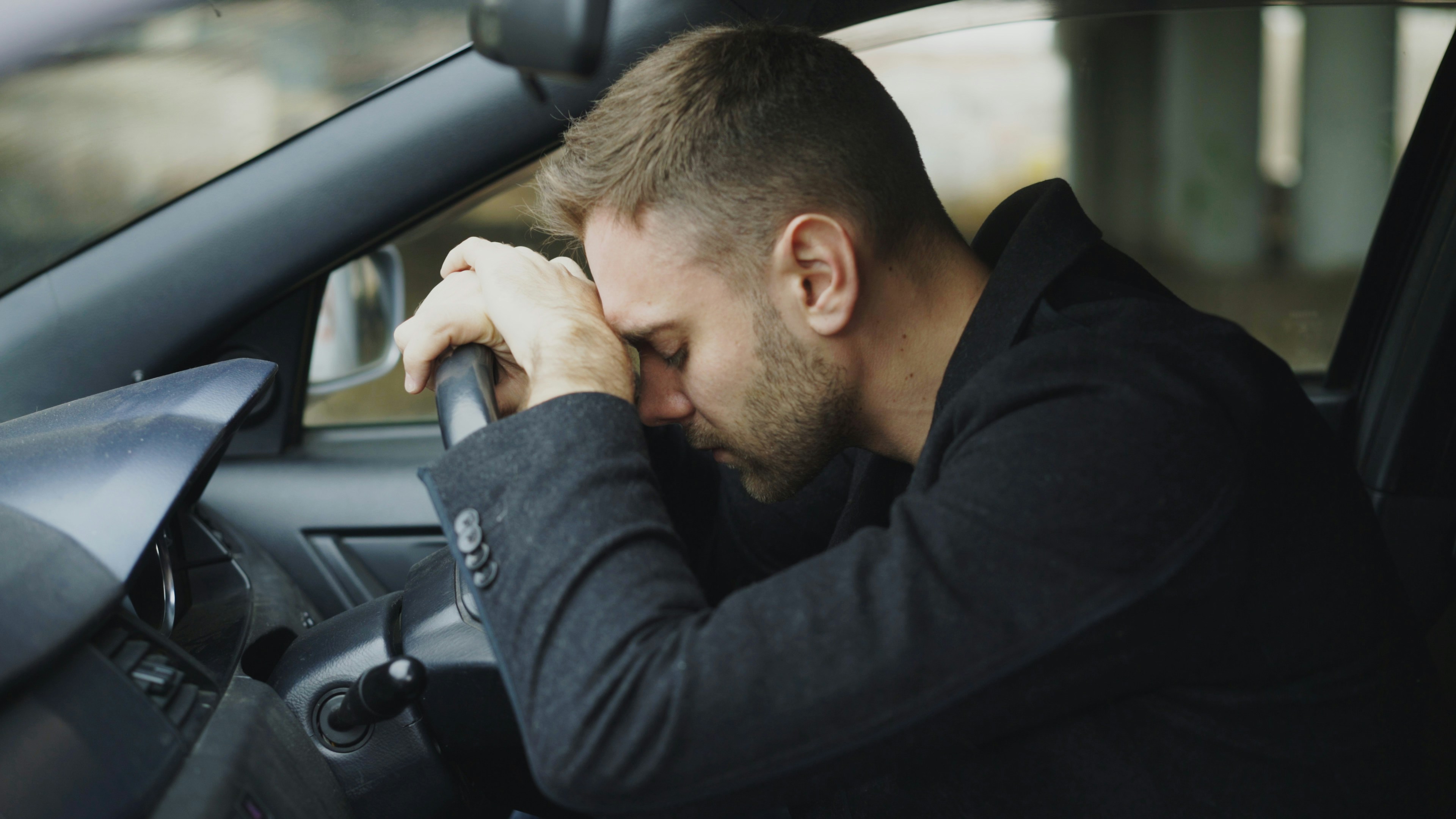
Depression in men frequently does not look like the version most people picture when they hear the word. It does not always look like crying, withdrawal, or an inability to get out of bed. More often, it looks like a man who is still going to work every day, still showing up to obligations, and privately convinced that whatever is wrong with him does not have a name, because what he is dealing with does not match the checklist he has in his head.
That mismatch is not an accident. It reflects a real, well-documented pattern in how depression presents differently in men, and it is a major reason depression in men so often goes unrecognized, by the people around them and by the men themselves, until it has already become severe.
The American Psychological Association's overview of depression symptoms describes the condition broadly: persistent sadness, loss of interest in previously enjoyable activities, changes in sleep and appetite, difficulty concentrating, and feelings of worthlessness or excessive guilt. All of that is accurate. It is also, for a meaningful number of men, an incomplete picture, because depression frequently expresses itself through a different set of symptoms that rarely gets included in the popular conception of what depression looks like.
Irritability and anger are among the most common of these alternate presentations. A man who is depressed may not describe himself as sad at all. He may describe himself as constantly on edge, short-tempered with his partner or kids over minor things, or carrying a low simmer of frustration that never fully resolves. This pattern is well established enough that clinicians increasingly recognize irritability as a legitimate, if underrecognized, depressive symptom in men rather than a separate issue entirely.
Depression in men also shows up physically far more often than the popular understanding of the condition accounts for. Chronic fatigue that does not improve with rest, persistent headaches, digestive problems without a clear medical cause, and unexplained aches and muscle tension are all documented presentations, and they are frequently investigated as separate physical health issues long before anyone considers that they might be connected to mood at all.
The National Institute of Mental Health notes that physical symptoms, including chronic pain and digestive issues that do not respond to standard treatment, are recognized features of depression, not just an occasional side note. A man who has been to a general practitioner multiple times for fatigue or stomach issues, received a clean bill of physical health, and never once connected the pattern to his mental state, is following an extremely common trajectory, not an unusual one.
A number of behavioral changes tend to accompany depression in men, and they are frequently misread as personality shifts, a busy season, or simply "him being him," rather than recognized as a coherent pattern worth examining together.
Increased risk-taking, working excessively, drinking more than usual, or throwing himself into physical activity to the point of exhaustion can all function as ways of avoiding stillness, because stillness is often when the underlying mood becomes harder to outrun. Withdrawal from friends and social activities, even ones he used to genuinely enjoy, is another common thread, and it often compounds the isolation that depression tends to feed on in the first place, a pattern I have written about separately in the male loneliness epidemic.
A drop in libido, difficulty concentrating at work, and a general sense of numbness rather than sadness, going through the motions of a life that used to feel meaningful, round out the pattern. None of these on their own necessarily indicates depression. Together, and sustained over more than a couple of weeks, they are a signal worth taking seriously rather than waiting out.
Untreated depression in men carries real risk, and the consequences of dismissing these symptoms are not abstract. According to the American Foundation for Suicide Prevention, men die by suicide at substantially higher rates than women in the United States, a disparity that researchers consistently connect back to lower rates of help-seeking and to depression symptoms in men going unrecognized, both by the men experiencing them and by the people around them, until a crisis has already developed.
This is precisely why learning to recognize the less obvious signs matters. A man who identifies chronic irritability, physical exhaustion, or withdrawal as possible depression symptoms, rather than dismissing them as unrelated personality traits or a rough patch, has a meaningfully better chance of getting support before the situation escalates.
Everyone has stretches of low mood, poor sleep, or general flatness that resolve on their own within a few days. Clinically, what separates ordinary difficulty from depression worth addressing is largely a matter of duration, intensity, and function. Symptoms that persist most of the day, nearly every day, for two weeks or longer meet a meaningful clinical threshold, particularly when they are accompanied by a noticeable decline in your ability to function at work, in relationships, or in basic daily tasks like sleeping, eating, or getting yourself out the door.
Another useful marker is whether the symptoms are new or represent a real shift from your baseline. A man who has always run somewhat irritable is different from a man who has become noticeably harder to be around over the last month in a way that feels foreign even to him. That shift, more than the specific symptom itself, is often what family members and partners notice first, sometimes well before the man experiencing it recognizes anything has changed.
Depression rarely stays contained to one part of a man's life, even when he is actively trying to keep it that way. At work, it frequently shows up as difficulty concentrating, a drop in the quality or consistency of output, or a growing sense that tasks which used to feel manageable now feel disproportionately heavy. Colleagues and managers sometimes read this as a motivation problem or a slump, when what is actually happening is a mood disorder quietly reducing cognitive bandwidth.
In relationships, the withdrawal and irritability described earlier tend to land hardest on partners, who often describe feeling shut out or blamed for a distance that has very little to do with them. This can create a difficult cycle: the partner feels hurt and pulls back or pushes harder for connection, the man feels more criticized and withdraws further, and both people end up more isolated from each other at exactly the moment they most need to be working as a team.
Depression in men rarely travels alone. It frequently overlaps with anxiety, a persistent undercurrent of worry or dread that coexists with low mood rather than replacing it, and the combination often intensifies both. If a racing mind and a flat, heavy mood are both part of your experience, the anxiety no one talks about goes deeper into how that particular combination shows up specifically in high-functioning men who are struggling far more than their outward performance suggests.
A specific kind of internal narration tends to accompany depression in men, one that insists the problem is not real, is not serious enough, or is a personal failing rather than a treatable condition. That voice is worth examining directly rather than accepting at face value, because it is frequently a symptom of the depression itself rather than an accurate read on the situation. I have written specifically about this pattern in the voice in your head that says you are not enough, which explores how that inner critic operates and what tends to quiet it.
Most of the men I see for depression did not walk in describing it as depression. They described being tired all the time, being irritable with people they love, feeling disconnected from work they used to care about, or simply feeling flat in a way they could not fully explain. Naming the actual pattern accurately, rather than treating the fatigue, the irritability, and the withdrawal as three unrelated problems, is often the first meaningful step, because it lets us treat the actual condition instead of chasing its individual symptoms one at a time.
From there, treatment is built around what is actually driving your specific presentation. For some men that means individual therapy focused on behavioral patterns and daily structure. For others, especially when the depression traces back to earlier, unresolved experiences, EMDR therapy addresses that material more directly than talk therapy alone tends to.
I don't feel sad, so how could this be depression? Very easily. Depression in men frequently presents as irritability, physical fatigue, numbness, or anger rather than sadness. The absence of obvious sadness does not rule out depression, and it is one of the main reasons the condition goes unrecognized in men as often as it does.
Could my constant fatigue and headaches actually be about my mental health rather than a physical issue? It is worth exploring both. Chronic fatigue, headaches, and digestive issues without a clear medical explanation are documented physical symptoms of depression, and ruling out a physical cause with a doctor while also considering the mental health angle is a reasonable, non-either-or approach.
Is it normal to feel more irritable and short-tempered than usual instead of sad? Yes, and it is common enough in men specifically that clinicians increasingly treat irritability as a legitimate depressive symptom, not a separate personality issue or a sign of a bad mood that will pass on its own.
What if I think I'm just going through a rough patch and it will pass on its own? Some low periods do resolve without intervention. The signal to take seriously is duration and pattern: symptoms lasting more than a couple of weeks, worsening over time, or accompanied by withdrawal, numbness, or thoughts of self-harm warrant professional attention rather than waiting it out.
Why do men wait so long to get help for this? Cultural conditioning around stoicism and self-reliance plays a large role, along with genuinely not recognizing atypical symptoms, irritability, fatigue, numbness, as depression in the first place. Neither reason reflects a personal failure, and both are addressable once named clearly.
My partner keeps saying I've changed, but I don't feel depressed. Could they be seeing something I'm not? It is common for partners and family members to notice a shift in irritability, withdrawal, or engagement before the person experiencing it names it as depression. Their observation is worth taking seriously as data, even if it does not match how you would currently describe your own internal state.
I offer individual therapy for men built specifically around how depression actually presents in men, not just the textbook version. For depression connected to earlier, unprocessed experiences, EMDR therapy is often part of that work, and online therapy is available throughout California. You can view my full range of services or read more about my approach and background.
If any of this sounds familiar, you do not need to wait for things to get significantly worse before it counts as a real reason to get support. Schedule a free 15-minute consultation and let's talk about what you have actually been carrying.
If you are in crisis or having thoughts of harming yourself, please call or text 988 (Suicide & Crisis Lifeline) or go to your nearest emergency room. This article is for educational purposes and is not a substitute for individualized professional mental health care.
There’s a big, beautiful world out there. You deserve to experience all it has to offer.
Let’s rediscover your strength.
